What is SEO-first web design and development? (And why most agencies get it wrong)
What is SEO-first web design and development? (And why most agencies get it wrong)
Table of Contents
Share this blog article
Facebook
Twitter
LinkedIn
Last updated: March 31, 2026 | Reading time: 19 minutes
Your website cost you $8,000, it looks beautiful and perfectly captures your brand. But then, three months later, you check Google and you’re still invisible. Your developer says the site is “SEO-friendly,” but you’re ranking on page 4 for the exact services you offer. You’re paying separately for SEO consulting, but they keep requesting changes that your developer says will “break the design.”
You know what happens when development, design, and SEO don’t talk to each other? Your business ends up bleeding leads month after month, and those missed opportunities really hurt your business.
SEO-first web design and web development can solve this problem by treating these three disciplines as inseparable from the start.
In this blog post, we’re going to talk about SEO-first web design and how this approach will not only save you big bucks but also help you out with your business’ visibility.
Web design vs. web development: What’s the difference?
Before going straight into the SEO-first approaches, let’s clear up the difference between web design and web development. These two work so closely together, that it’s no wonder many mix them up.
Web design is all about how your website looks and feels. Web designers create the visual blueprint of your site. They choose brand colors and fonts, decide where images go, and map out how visitors move through your pages. They’re constantly asking: Does this layout make sense? Will people know where to click? Does this look good on phones?
On the other hand, web development transforms those pretty designs into a functioning website. Developers take the designer’s vision and turn it into something you can actually click on and interact with.
Your developer writes code that makes contact forms send emails, ensures fast loading, and makes everything work across different browsers. They handle databases, server configurations, and prevent crashes when traffic spikes. If designers are architects, developers are the contractors who make sure everything actually works.
Do you need a web designer in order to develop a website? Not necessarily. But you might find yourself hitting a wall when you’re unsure if a color combo is accessible, or if your hero image clashes with your chosen font. These are the moments when design expertise makes all the difference between a site that looks “okay” and one that feels effortless.
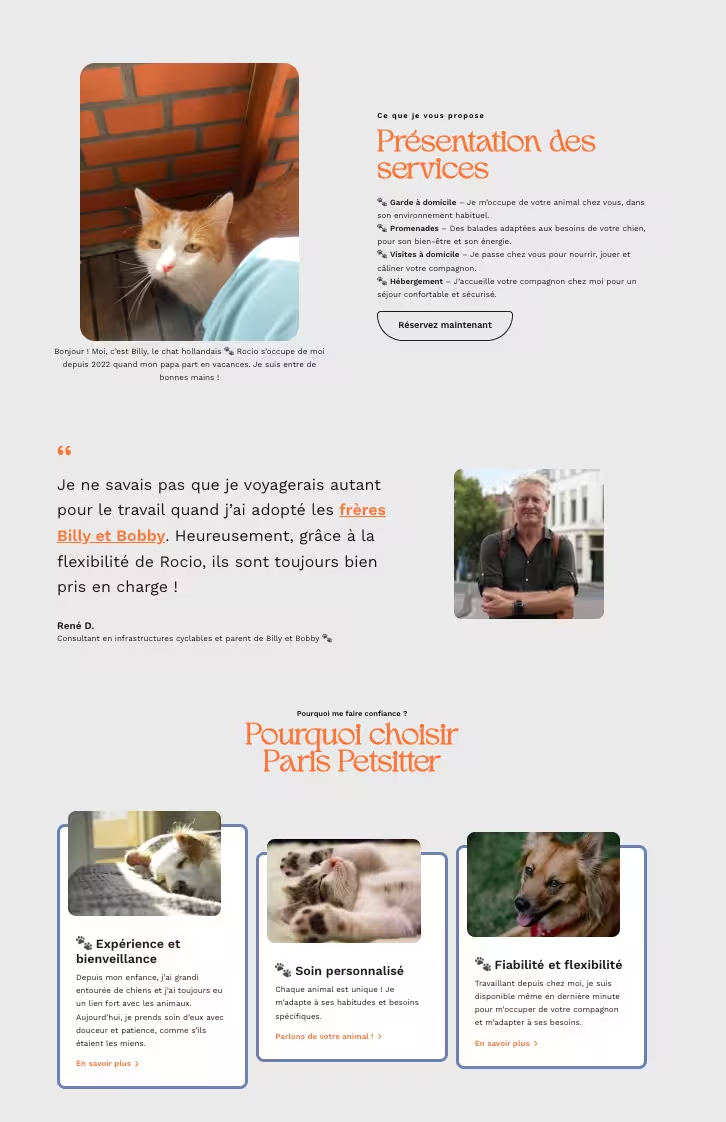
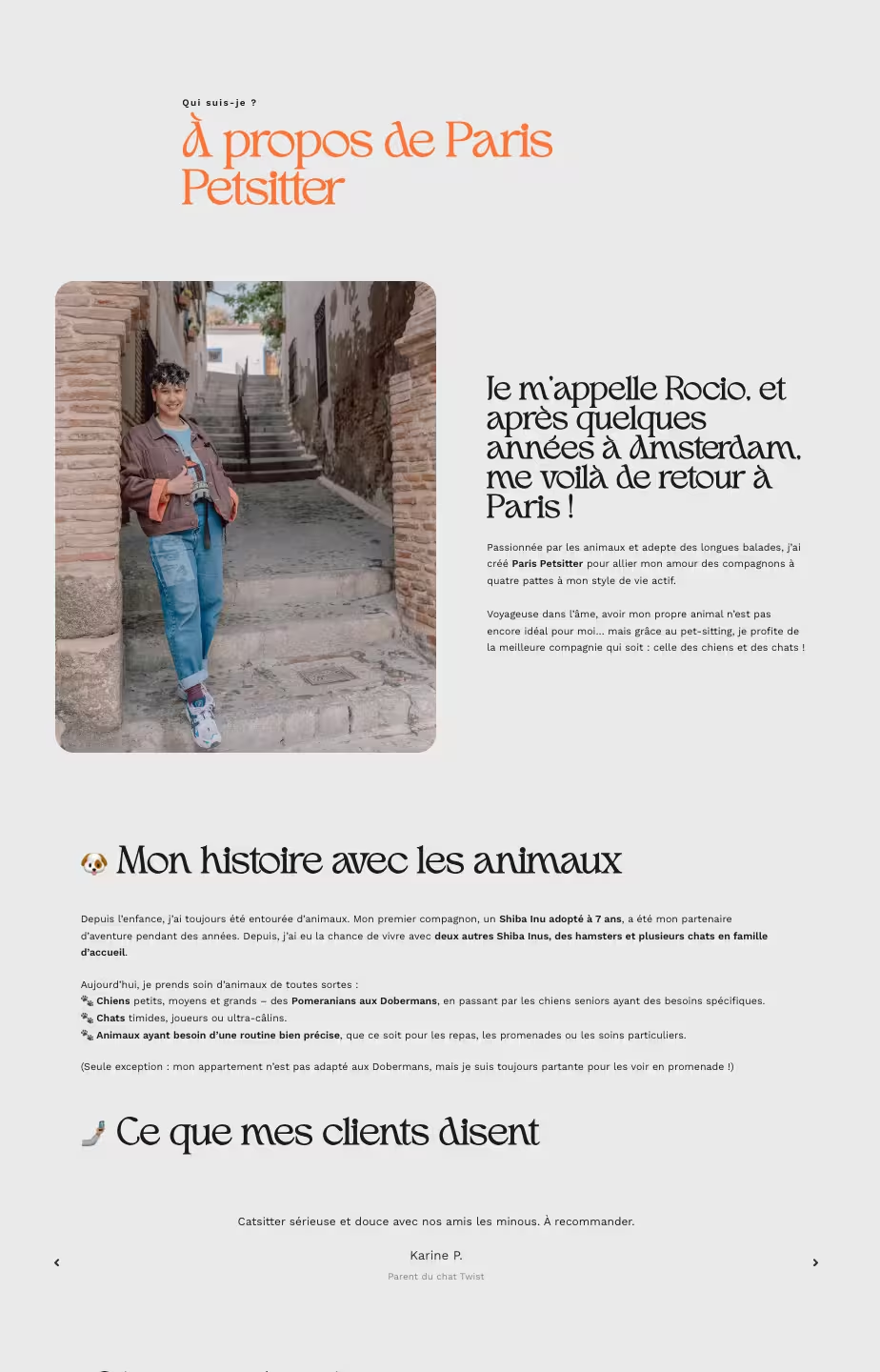
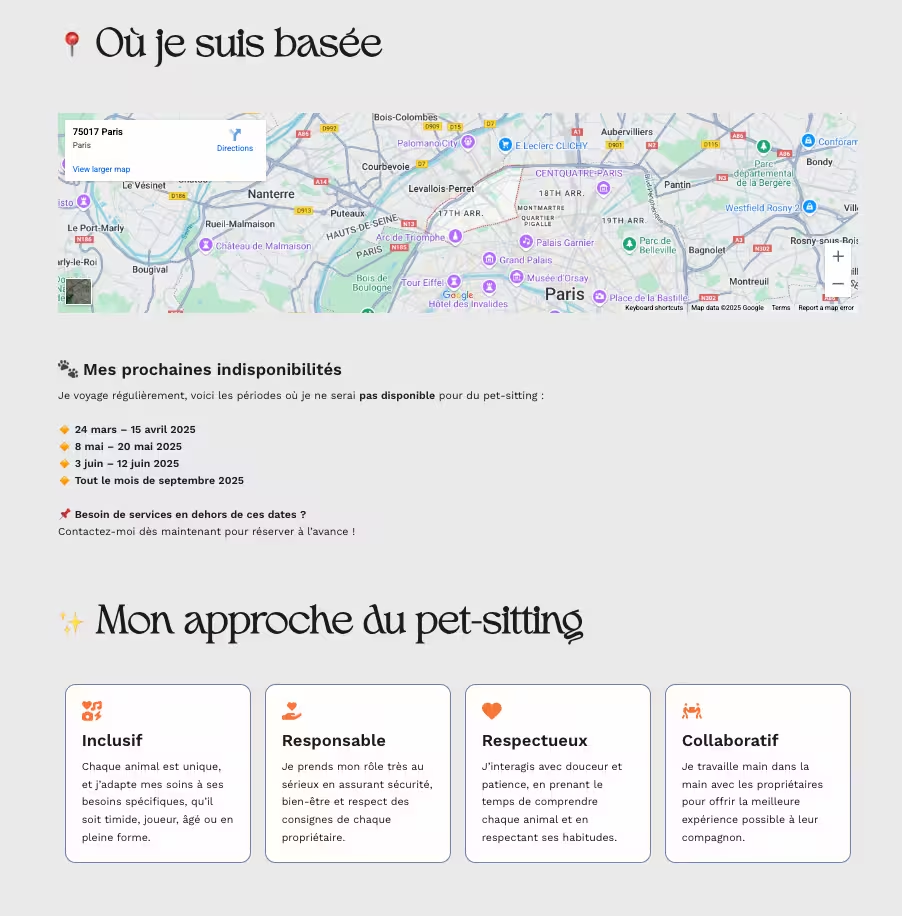
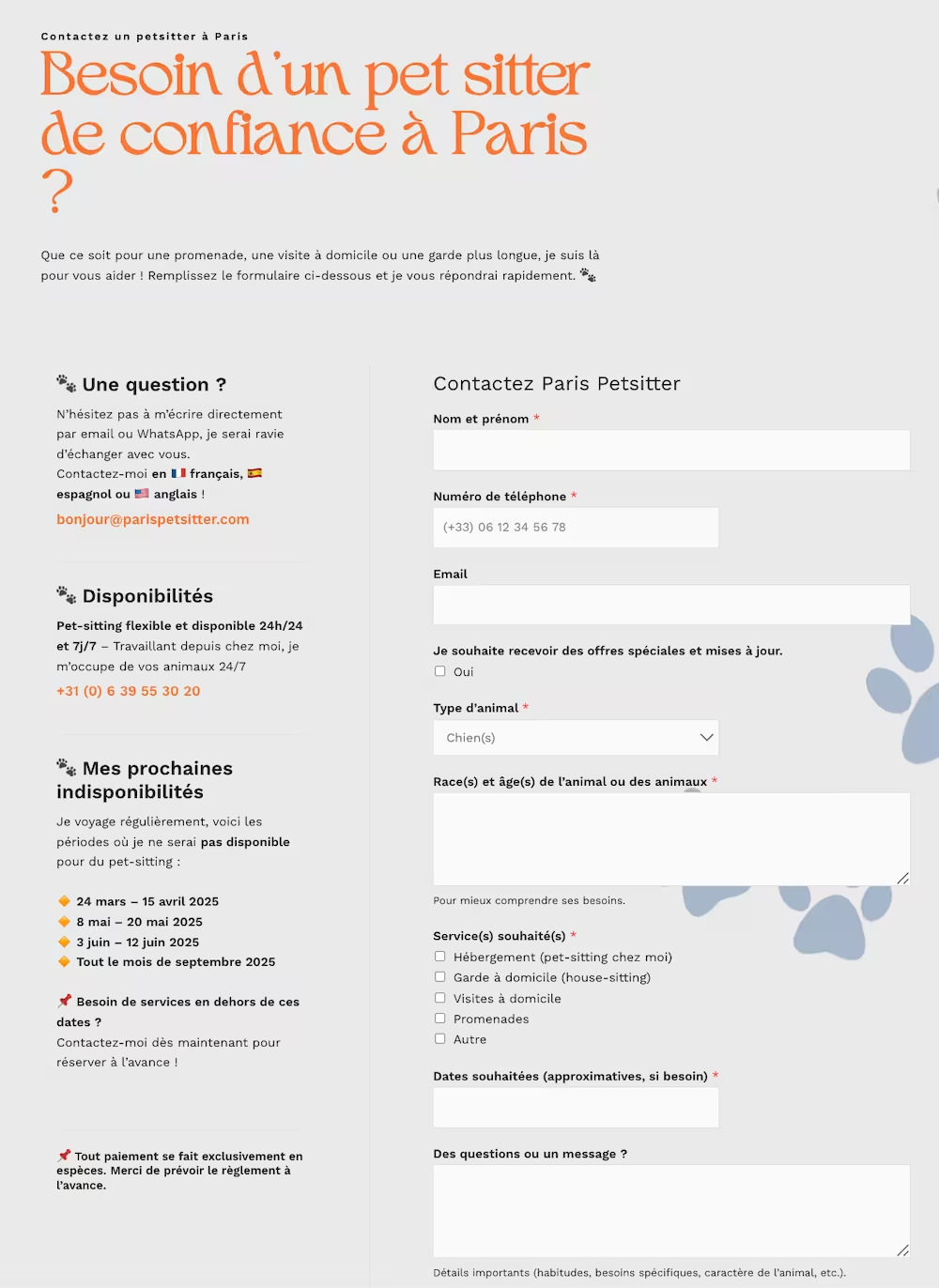
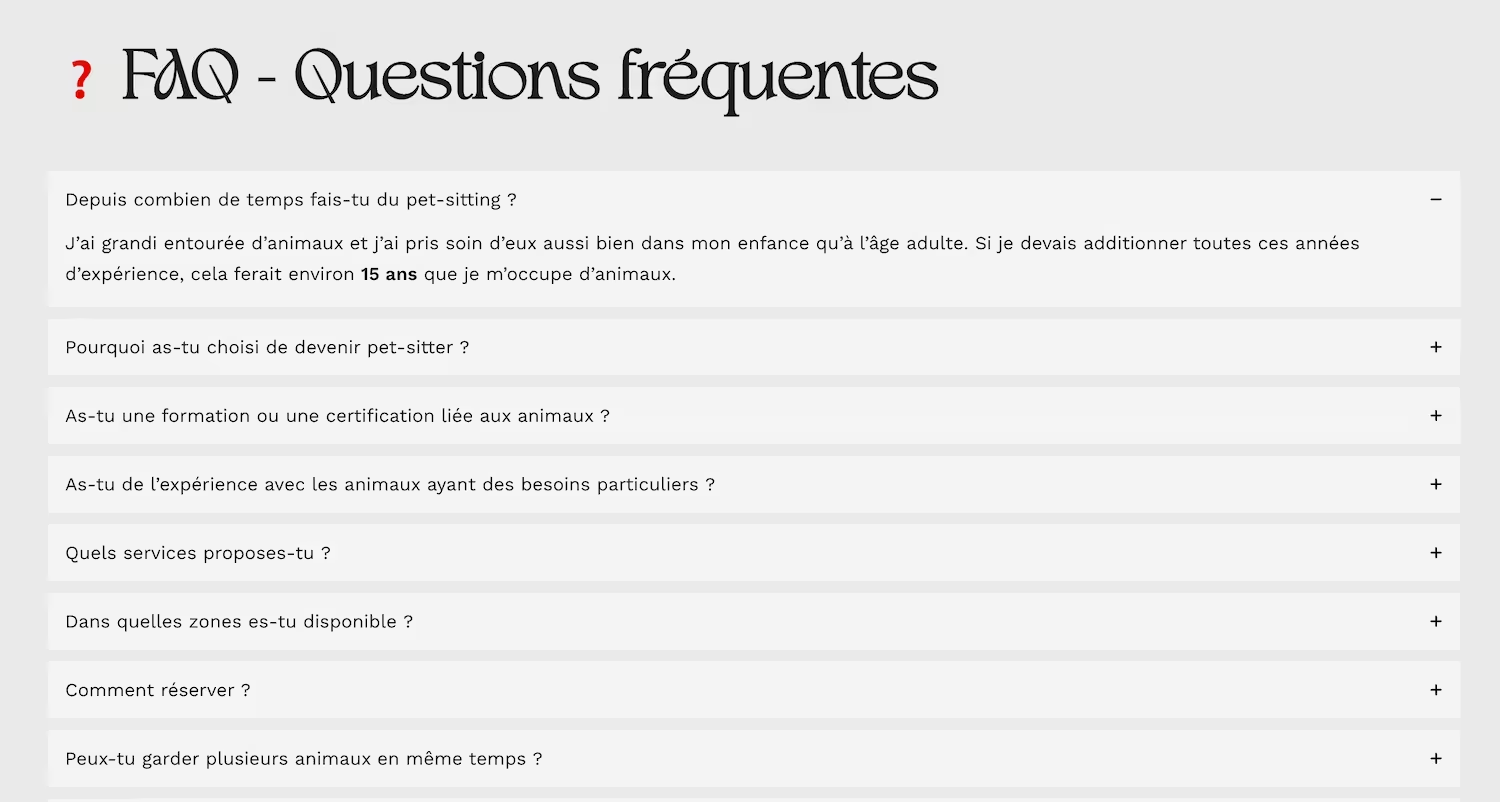
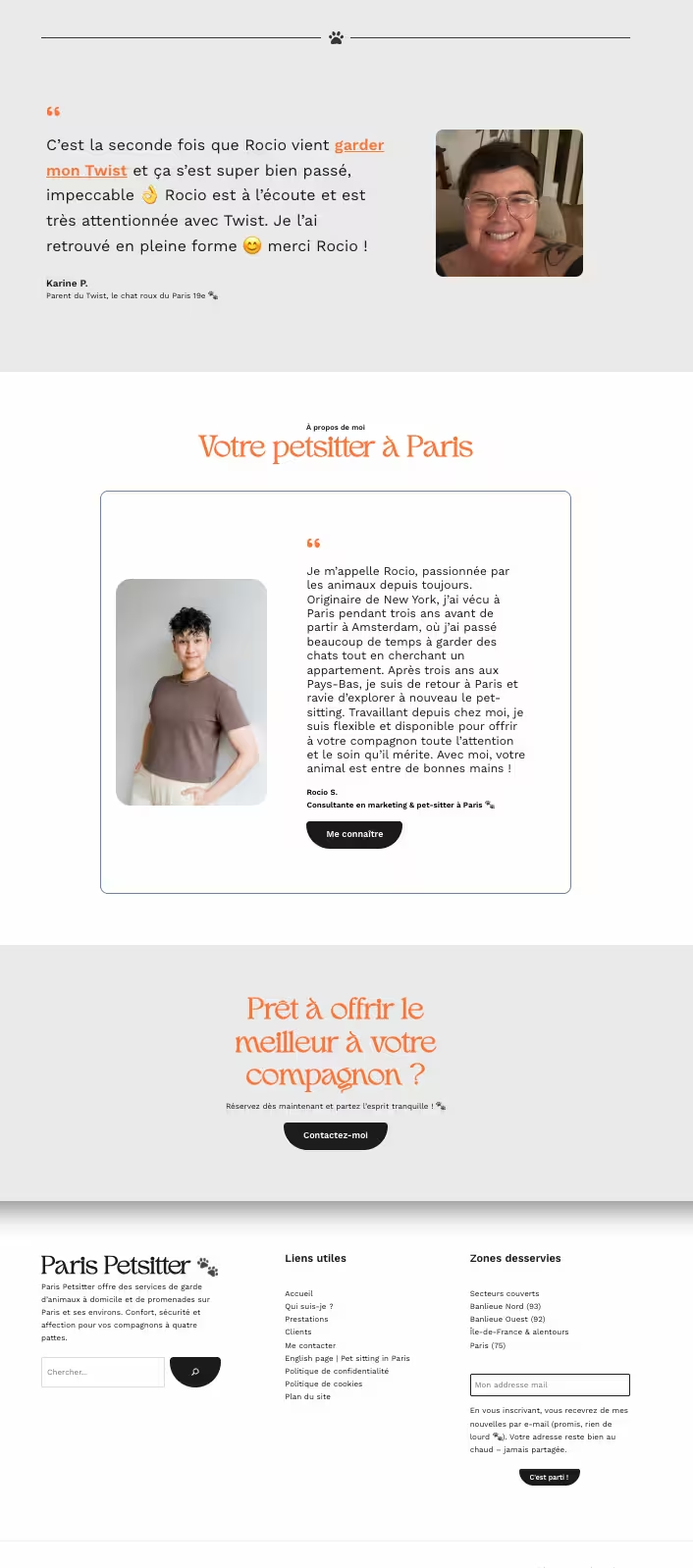
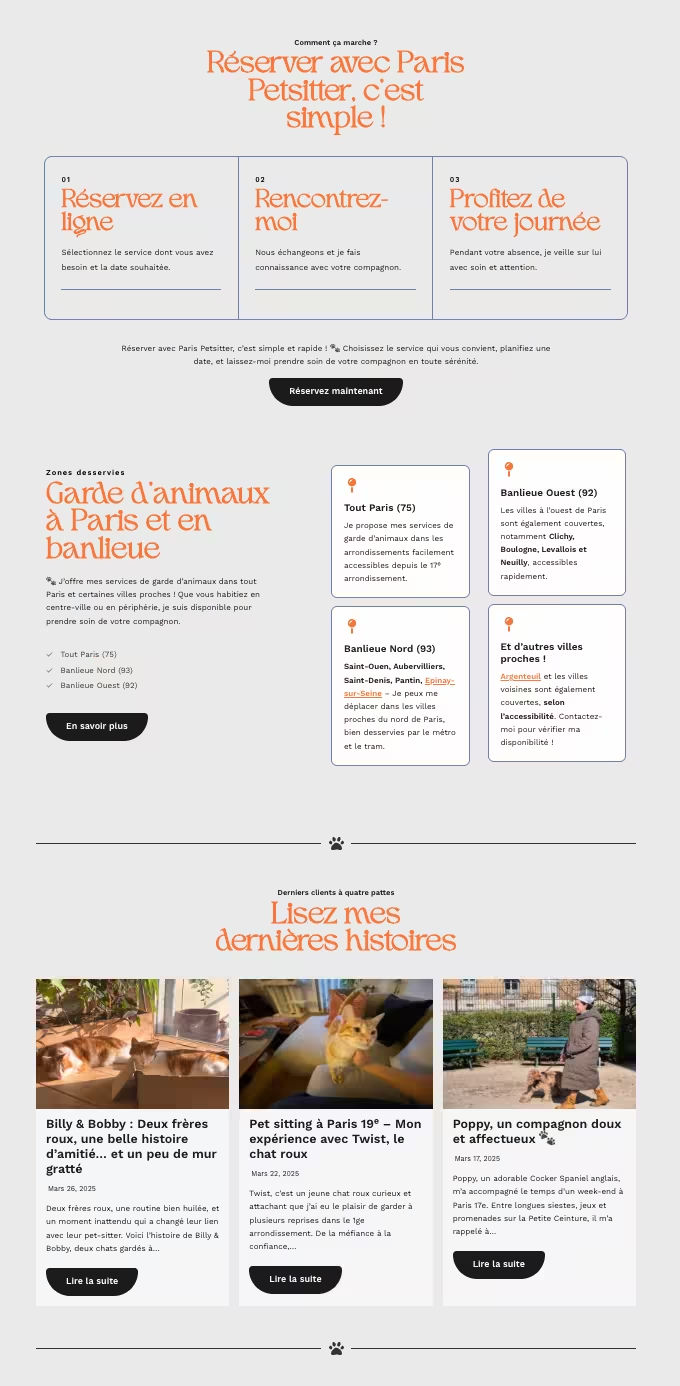
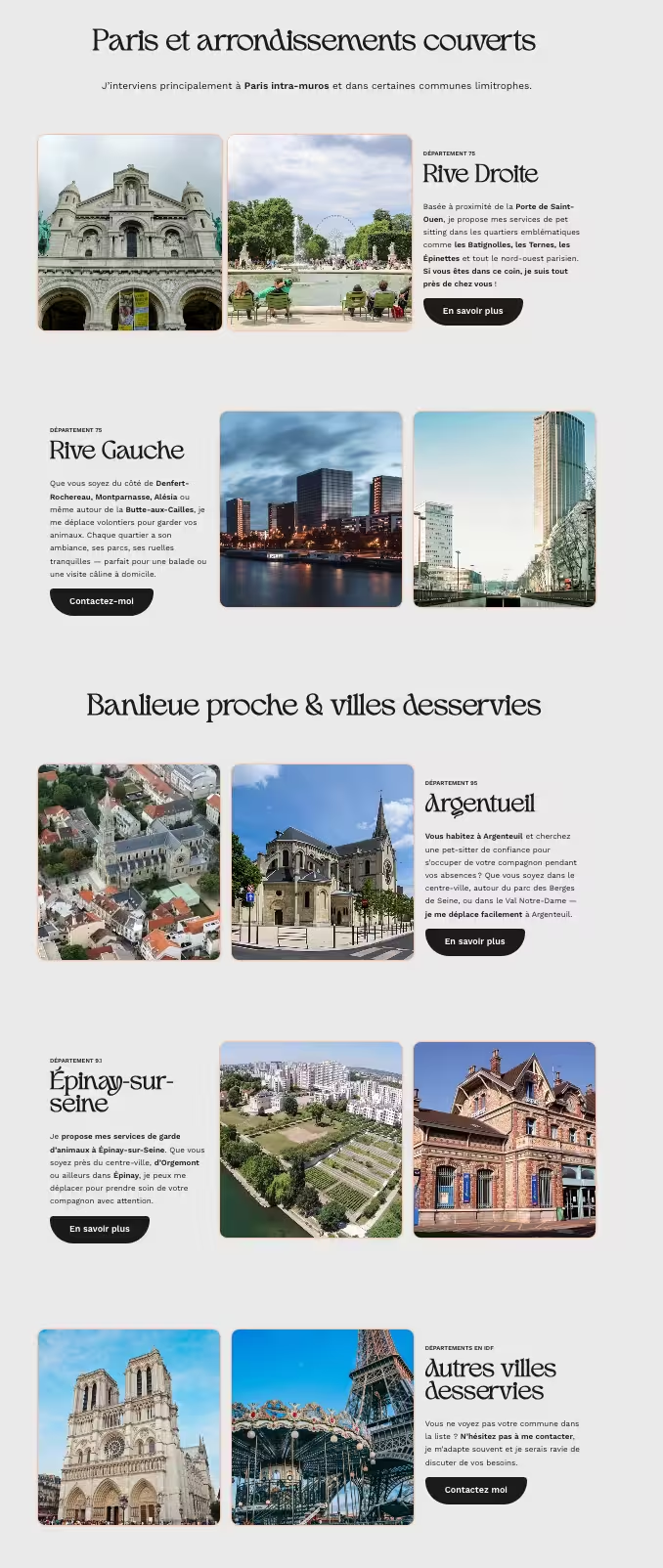
Take my own site that I designed and developed within a week, Paris Petsitter, for example. I didn’t consult a web designer for this project. I’ll be completely honest with you: I borrowed fonts from Marketing by Rocio, tested color palettes on Coolors, and fine-tuned buttons until everything felt right. Sometimes, that’s all a small business needs: a clean, functional site that reflects your personality and gets the job done.
But when you want a website that’s fully brand-aligned, accessible, and strategically built to convert visitors into clients, that’s where a professional touch makes all the difference. At Marketing by Rocio, we combine web design, UX strategy, and SEO-friendly development under one roof, so you get a site that looks beautiful and performs beautifully.
A detailed look at the personalized pet care services and real client love stories that define Paris Petsitter.
Rocio, founder of Paris Petsitter, sharing her personal story and passion for animal care in Paris.
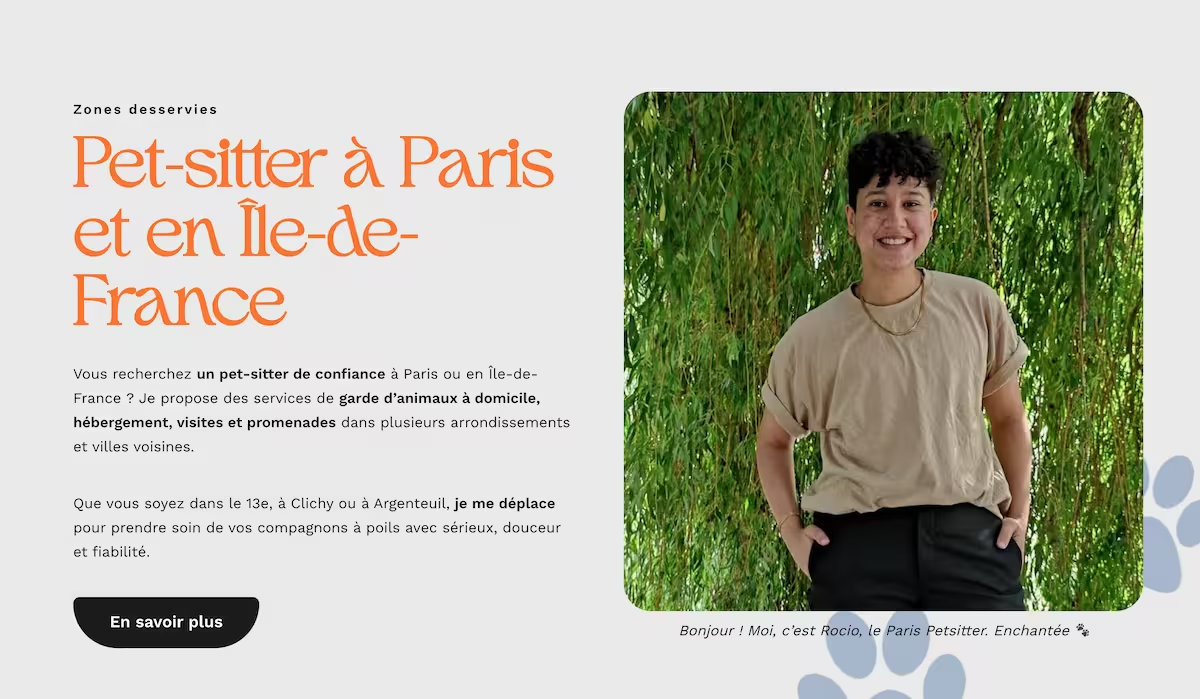
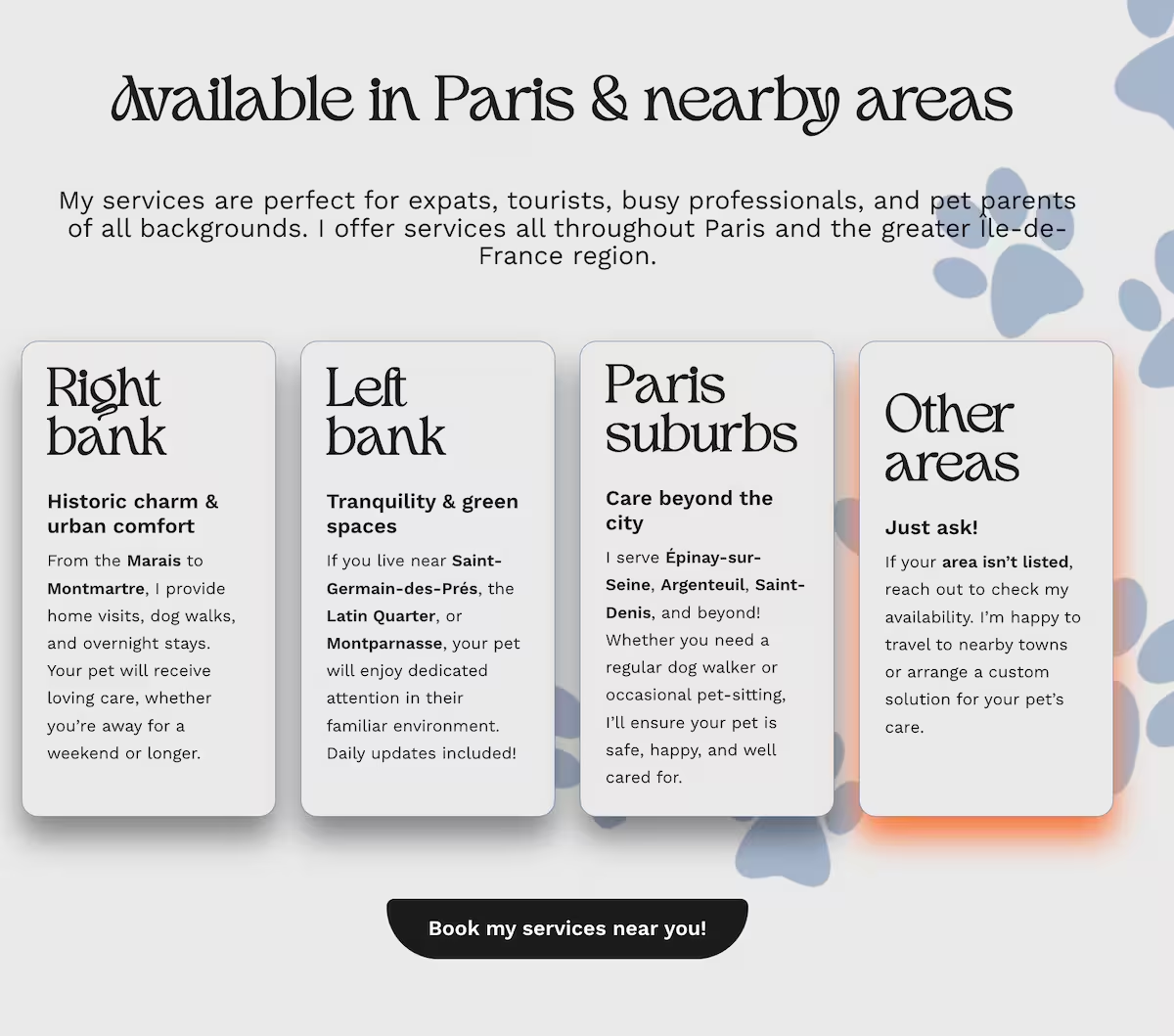
Service area descriptions for Paris and surrounding suburbs.
The Paris Petsitter contact page, making it easy for clients to book or inquire about services across Paris and IDF.
The FAQ section of Paris Petsitter answers common client questions with clarity and care.
Stay connected with Paris Petsitter—view covered zones, join the newsletter, or explore more.
A detailed look at the personalized pet care services and real client love stories that define Paris Petsitter.
Area gallery from the French version of the site, showing where Paris Petsitter provides in-home pet care.
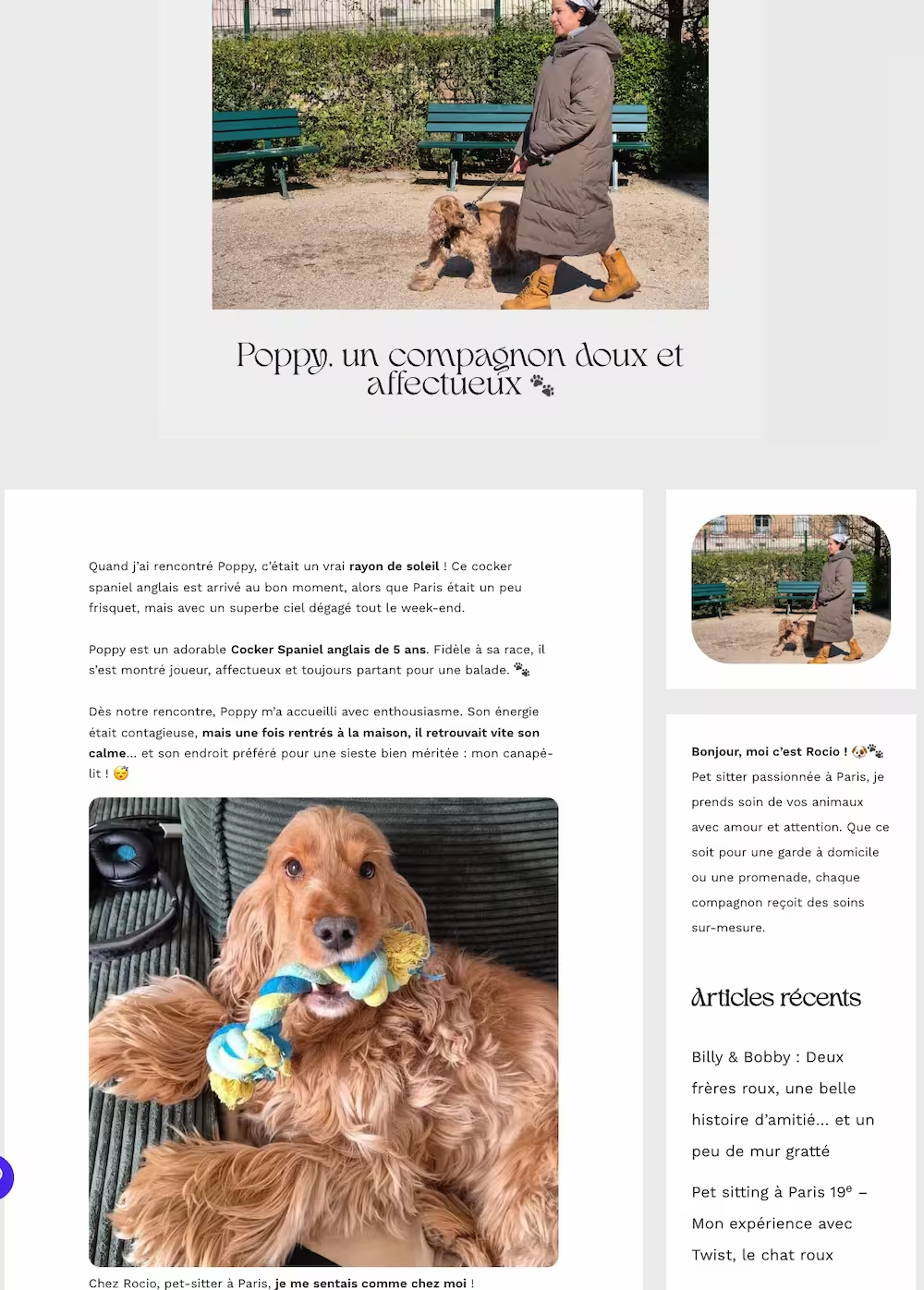
A snapshot from my blog, where I share personal stories like my weekend with Poppy, an affectionate Cocker Spaniel I walked through the 17th arrondissement—showcasing the trust and bond built with each companion in my care.
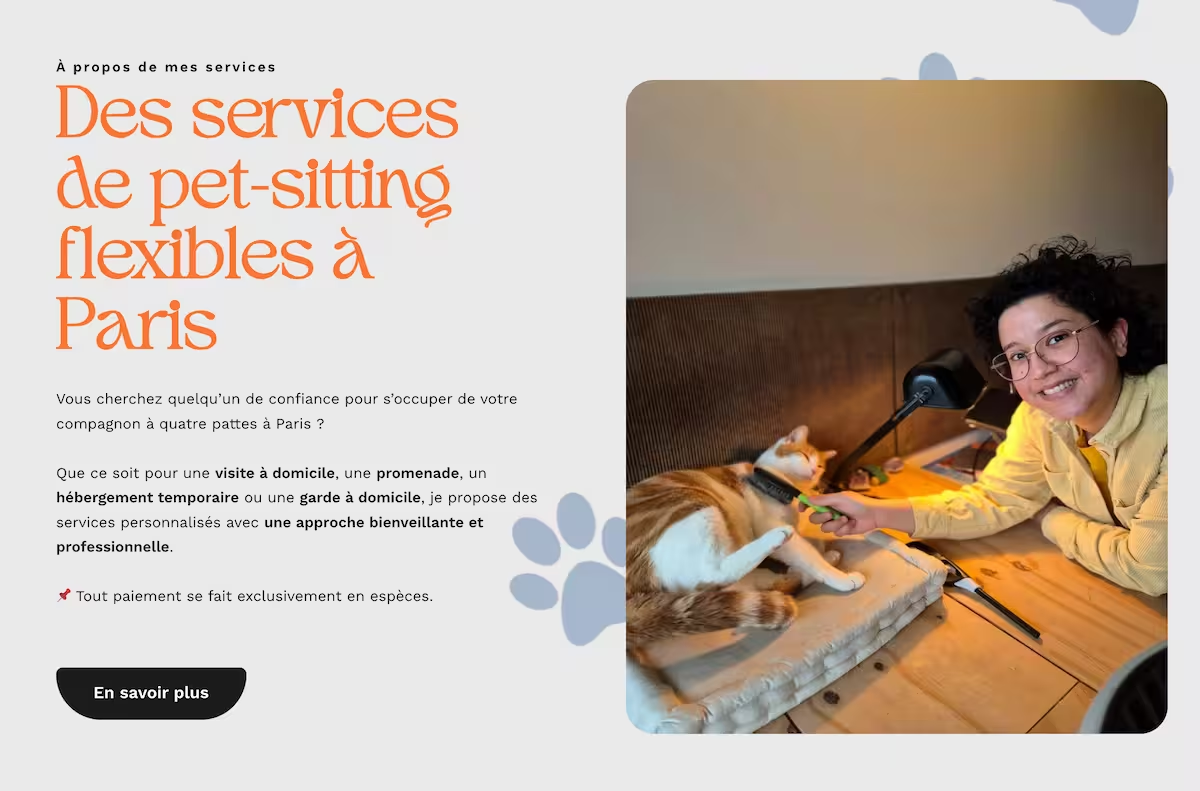
First-fold of the services page of Paris Petsitter.
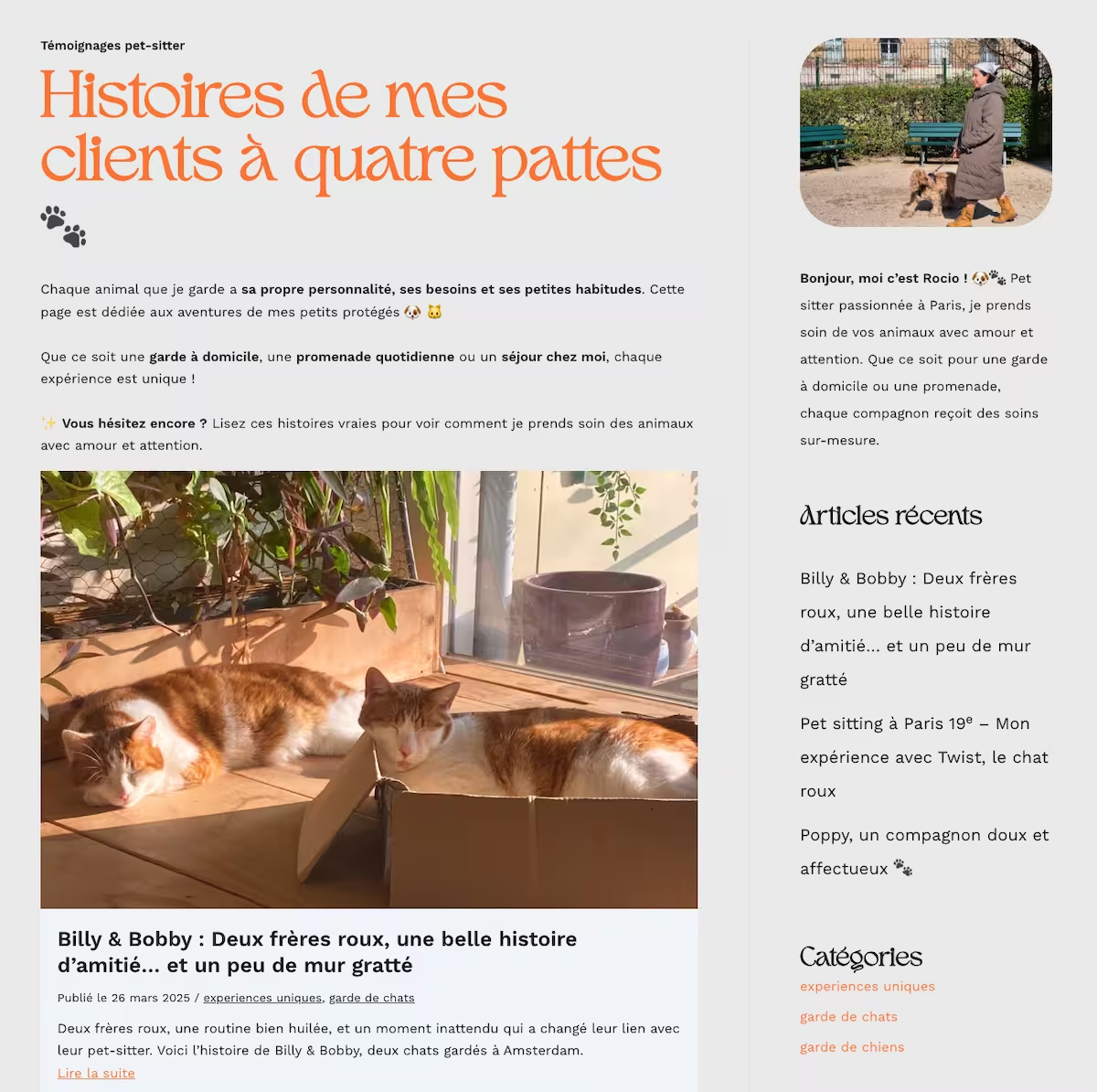
Meet Billy & Bobby—two Dutch tabby brothers featured in one of my most-read blog posts. Stories like these help future clients connect with my care style and improve organic visibility for local cat sitting services in Paris.
I offer pet-sitting services across Paris and northern Île-de-France—always with kindness and care.
English-language version of Paris Petsitter explaining service zones and availability for expats and travelers.
Are you a petsitter too? Want a web designed like this?Then let’s talk →
Conversely, do you need a web developer in order to design a site? Again, not always. You can design mockups, plan your layout, and even use drag-and-drop tools, but you’ll eventually need someone who can bring it all to life. Without proper development, even the most beautiful design stays static and unusable.
Ideally, working with a professional who understands both web design and web development bridges that gap. Or, partnering with an agency that handles both will likely save you time, money, and unnecessary back-and-forth.
If design, accessibility, and visuals matter as much to you as fast load times, seamless navigation, and secure forms, then combining web design and web development is the smartest (and smoothest) way to go.
What SEO-first web design and development actually means
Most web developers build your site first, then add “SEO-friendly” features like meta descriptions and image alt tags. That’s not SEO-first web development but just retrofitting.
True SEO-first web development means your site architecture, code structure, and visual design decisions all support search visibility before you write a single page of content. Your developer chooses frameworks that render quickly for search engines. Then, your designer creates navigation that both humans and Google’s crawlers understand intuitively. Last but not least, your SEO strategist should map keywords to pages before those pages exist.
When web development, design, and search optimization are treated as separate tasks, it often creates foundational problems that must be fixed later, causing significant delays (been there, done that, and I don’t want this for you). This reactive process of auditing and implementing technical fixes can take one to three months alone before any other SEO work can even begin.
In contrast, an integrated approach that incorporates SEO from the start yields much faster results. When I launched Paris Petsitter in March, I saw a clear difference within weeks. Because keyword strategy, UX, and technical SEO were baked into the design and development process, the site began ranking locally almost immediately, without a single euro spent on ads. Within the first 24 days, impressions increased by over 20%, clicks nearly doubled, and the click-through rate rose by 50%. That’s the power of treating SEO as a design principle, not an afterthought.
What “we’ll optimize it later” could actually cost you rankings
Trying to optimize a website after it’s built is exhausting and expensive. And more importantly, it rarely works well.
When you try to add an SEO website strategy after the fact, you’re essentially trying to rewire a house after the walls are sealed. Sure, you can do it, but you’ll be cutting holes, running new lines, and patching things up in ways that never look quite right. Your site ends up with band-aid solutions instead of strong foundations.
What really changed the game was how search engines evolved. Google now evaluates everything about your site’s performance. A beautiful design means nothing if your pages take forever to load. Perfect content gets buried if your site doesn’t work well on phones. And even the best SEO-ready website will struggle if the underlying structure is a mess.
Here’s a real example that might hit home: Sites that take more than three seconds to load lose over half their visitors. And Google knows this. So even if you’ve written the perfect content that speaks directly to your ideal clients, if your site is slow, Google will show it less to them. Your competitors who invested in SEO and web development services from the start will outrank you almost every time.
And this “we’ll optimize later” came at a real cost for a past client of mine. They had spent money and time developing their website on Wix, of all places. But when they came to me, a year into their efforts, I tried my best but flagged ad nauseam that there were limitations to what I could do given the rudimentary nature of Wix’s UX/UI. This client didn’t see much change in SEO results for the following year until they moved to WordPress.
The cost of waiting to think about SEO is real. Lower rankings mean you’re invisible to potential clients when they’re actively searching for help. Lost traffic translates directly to lost revenue. And while you’re scrambling to fix things and catch up, competitors who understand the benefits of SEO-first websites are already establishing themselves as the go-to providers in your field.
The key components of an SEO-first approach to web design & development
Building your website with an SEO-first approach means focusing on four core areas from the start. When these components work together, they create a strong foundation that helps your business get found by the right clients and grow sustainably.
Speed is everything
Nobody waits around for slow websites anymore. And when I say nobody, I mean 53% of mobile users will leave if your site takes more than three seconds to load. Three seconds. That’s less time than it takes to read this sentence out loud.
Making sites fast isn’t about cutting corners on design. A smart SEO web development focuses on smart optimization. This means compressing images so they load quickly without looking pixelated. It means writing clean, efficient code that doesn’t bog down browsers. And it means implementing smart loading strategies that show the important stuff first while everything else loads in the background.
Speed isn’t just about keeping visitors happy (though that’s certainly important). Google uses site speed as a ranking factor. Slow sites get pushed down in search results, while fast sites get rewarded with better visibility. That said, speed has become a non-negotiable these days when it comes to making a website.
Mobile-first thinking
Over half of all web traffic now comes from mobile devices. And for many service providers, especially those serving local communities, that percentage is even higher. Google recognized this mobile-first shift and now looks at your mobile site first when determining rankings.
But mobile-first doesn’t mean taking your desktop site and shrinking it down to fit on a phone screen. Good SEO web development and design create experiences that work beautifully regardless of device.
This means designing specifically for mobile users with easily tappable buttons, readable text that doesn’t require pinching and zooming, and navigation that makes sense on a small screen. Plus, the development work ensures the site is built with a responsive layout, clean code, and optimized images so that it loads quickly and functions perfectly on any device.
Your potential clients are searching for someone like you (therapists, lawyers, and creative services) on their phones while commuting, during lunch breaks, or in those quiet moments at home. If your site doesn’t work flawlessly on their device, they’ll move on to someone whose site does.
Clear website structure
A well-structured website is like a well-organized store where everything is exactly where you’d expect to find it. Every important page should be reachable within three clicks from your homepage. Your navigation menu should be simple and intuitive. And the flow from general information to specific services should feel natural.
Search engines also use your site’s structure to understand what you offer and how different pieces of content relate to each other. A logical hierarchy helps Google understand exactly what you provide and when to show your site in search results. For example:
Home → Services → Individual Therapy → Anxiety Treatment
When you don’t plan structure as part of your SEO web design and development, you end up with a maze that frustrates both visitors and search engines. Pages get buried, important content becomes hard to find, and your rankings suffer across the board.
Technical foundations
The technical side of SEO-first web development might sound intimidating, but it’s really about attention to detail (maybe that’s my Virgo energy, but that’s where I excel.) Clean URLs that actually describe what’s on the page are way better than those that are cryptic.
For example: yoursite.com/anxiety-therapy instead of yoursite.com/page?id=47592.
Proper page titles that tell both people and search engines what to expect. Descriptions for images so search engines understand what they’re looking at.
Think of these technical elements as labels in a filing system. Everything needs to be clearly marked so that when someone (or Google) is looking for something specific, they can find it immediately. These aren’t add-ons or nice-to-haves but actually fundamental to how search engines understand and rank your content.
Liking this? There’s more where that came from.
I write monthly emails about building websites that actually work, combining strategy, SEO, design, and development from the ground up. If you’re into SEO-first thinking, no-BS advice, and the behind-the-scenes of queer business building, you’ll probably like the newsletter.
The benefits of sticking to an SEO-first web development strategy
Implementing an SEO-first web development strategy means your site is built from the ground up for success in search. But what do the results actually look like in practice? The benefits are clear and include the following:
Higher rankings and more visibility
More traffic that actually converts
Better user experience
Cost savings over time
Competitive advantage
Higher rankings = more visibility
The most obvious benefit of SEO-first web development is showing up where your potential clients are actually looking. Instead of languishing on page five of search results, your site appears on page one when someone searches for services you offer. And that visibility translates directly into more inquiries, more clients, and more revenue.
But don’t fall for the trap thinking that visibility means ranking for just any search term. An SEO website strategy done right means ranking for the specific terms your ideal clients use. For example, a therapist specializing in LGBTQ+ affirming care wants to show up when someone searches for exactly that, not just generic “therapy near me” searches.
More traffic that actually converts
Not all website traffic is created equal. You don’t just want visitors, you want the right visitors. People who are actively looking for your specific services, who resonate with your approach, and who are ready to take the next step.
Benefits of SEO-first websites include attracting these qualified visitors naturally. Because your site is optimized for the specific terms your ideal clients use, the people who find you are already interested in what you offer. They’re not random browsers but potential clients who need exactly what you provide.
Better user experience
Fast loading times mean visitors don’t get frustrated waiting. Clear navigation means they find what they need quickly. Mobile optimization means they can research your services wherever they are. All these elements that make a site rank well also make it more pleasant to use.
And happy visitors are more likely to become clients. They spend more time exploring your services, they’re more likely to reach out, and they’re more likely to recommend you to others. The same strategies that please search engines also please humans, especially when executed right.
Cost savings over time
Here’s where SEO and web development services really prove their worth. When you build a site with SEO baked in from the start, you avoid expensive retrofitting later. No paying for major restructuring, constant patches and fixes, and starting from scratch because the foundation is too broken to repair.
Unlike paid advertising that stops working the moment you stop paying, good SEO keeps delivering results month after month. A site built with SEO web development principles continues attracting clients long after the initial investment.
Competitive advantage
Most businesses still get this wrong. They’re still building pretty websites first and thinking about SEO later (if at all). By investing in SEO-first web design and web development, you’re immediately setting yourself apart from competitors who are making these common mistakes.
Common red flags to avoid in website development
When planning a new website, you need to ensure SEO is a core component, not a final coat of paint. Work with a team that integrates search best practices from day one.
Here are the most common and damaging mistakes to avoid:
Waiting to add SEO later: This is the biggest mistake. If a developer or designer says, “We’ll worry about SEO after the site is launched,” they fundamentally misunderstand modern search. SEO is a blueprint requirement, not an afterthought.
Ignoring mobile users: Focusing on a beautiful desktop experience while neglecting mobile users will quickly tank your rankings. Given Google’s Mobile-First Indexing, your site must be designed and built for the “Googlebot Smartphone” first.
Treating site speed as secondary: If the team discusses site speed as an optional perk or something to “optimize later,” that’s a warning sign. Site speed is a direct ranking factor and a critical component of user experience. Slow pages drive both Google and visitors away.
Using bloated or uncompressed media: Employing massive, uncompressed images or videos sacrifices load speed for marginal aesthetic gain. This instantly harms your core web vitals and frustrates impatient users.
Prioritizing looks over function: If the entire focus is on how “pretty” the site is without a deep discussion on function, site structure, and user flow, you’re heading for problems. Good design should support, not override, findability and usability.
Creating confusing navigation: Designing overly “creative” or complicated navigation and information architecture will confuse both human visitors and search engines (Googlebot). Your site structure must be logical and easy for anyone to follow.
Forgetting user impatience: The most basic failure is forgetting that users want information quickly and easily. If your site doesn’t immediately deliver relevance and a smooth experience, the user will leave, undermining all your other efforts.
Frequently asked questions about SEO-first web development
What is SEO-friendly vs. SEO-first web development?
SEO-friendly simply means your site avoids obvious issues like slow speed or missing basic tags. SEO-first means your entire website, from its underlying code to its structure and content, is strategically built to achieve top search rankings before it ever goes live.
Is SEO still worth it in 2026?
Absolutely, SEO is more valuable than ever in 2026. While the search landscape is constantly evolving. While the search landscape is constantly evolving, the need for businesses to show up in relevant search results hasn’t died. Investing in a clear site structure and quality content is the most sustainable way to grow.
Do web developers handle SEO?
Some developers handle the basic technical SEO aspects, but many don’t integrate the full ranking strategy needed for success. The danger is that they may accidentally publish unfinished content with indexation enabled or compromise on structure without understanding the long-term SEO consequences.
How does design affect my SEO?
Your design dictates how both search engines and human users interact with your site. Key elements like mobile responsiveness, text hierarchy, and navigation influence how much traffic you get and how easily your site is crawled, indexed, and trusted by Google.
Can I design a site that ranks well?
Yes, you can, but you have a much better chance if the design is built with SEO in mind. You should also consider the CMS you’re planning to work with for your website. While these CMSs have improved their SEO capabilities, they still have limitations in terms of speed optimization and technical flexibility. If you’re wondering which CMS is best for small business SEO, the answer depends on your specific needs, but custom solutions often outperform builders in competitive markets.
Do I need to redesign my site for SEO?
Not always, but a redesign is often the most efficient fix if your current site is slow, structurally confusing, or wasn’t built for performance. If you’re trying to optimize something that was never designed to rank, a strategic redesign sets a strong foundation for long-term growth.
Not sure where to start making an SEO-first website?
If the world of web development and SEO already feels complicated, the idea of an SEO-first website might seem overwhelming. But don’t worry, it doesn’t have to be a struggle!
I’m proud to announce that Marketing by Rocio is now offering SEO-first web design and web development services! I’ve seemed up with Olivia Daniels, San Francisco-based brand and web designer, to bring this service to you.
Here’s what Olivia says about SEO-first design and web development.
I’ve lost count of how many gorgeous websites I’ve seen that just don’t work. They look incredible, but no one can find them on Google, or people land and immediately leave confused.
Design isn’t just about making things pretty, it’s about making them work. When Rocio and I team up from the beginning, their SEO strategy influences how I build the layout and tell the story visually. My designs help their strategy come alive. It’s a natural back-and-forth.
Can people read the text easily? Is the button where they expect it? When design, SEO, and user experience work together from the start, you get something that’s not just beautiful, but actually gets results.
Olivia Daniels
Want to work with Olivia and Rocio? At Marketing by Rocio, we take the hassle out of this process. We use our proven SEO expertise to elevate your website with the best ranking intentions in mind while preserving your unique brand, competitive edge, and high-quality design.
Rocio Sanchez (any pronoun) is a multicultural digital marketer and multilingual brand strategist based in Paris, with connections to New York City and Amsterdam. As the founder and CEO of Marketing by Rocio, a digital marketing agency established in 2020, they leverage their background in fashion studies and marketing communications to serve LGBT+ and BIPOC-led businesses. With notable clients including Queerency, HER app, and Nicole Zïzi Studio, Rocio brings "big concept marketing ideas down to earth" while helping underrepresented entrepreneurs authentically connect with their audiences. Their role as a co-founder of the BENELUX LGBTIQ+ Business Chamber and certification as an LGBT Business Enterprise demonstrate their commitment to fostering community and creating opportunities for queer entrepreneurs to thrive in the digital landscape.
SEO can be powerful, but it's not automatically the right first move. Compare SEO with social media, paid ads, referrals, networking, and content marketing to find the best fit for your business.
Why have a blog when social media and AI already exist? This is an honest look at the common objections, what a blog can actually do for a service business, and how to know if it's the right move for yours.
Yes, people still read blogs in 2026. They just don't read them the way they did in 2016. Here's what changed, what still works, and how to know if your business actually needs a blog.
⭐️⭐️⭐️⭐️⭐️ “As a therapy practice based in New York City, Rocio was a fantastic match for our SEO needs. … It felt like Rocio really wanted to help our company, and delivered very impressive results. … Highly recommend!!!” – Nick Fager, Expansive Therapy
⭐️⭐️⭐️⭐️⭐️ “Rocio’s SEO audit and implementation work gave my website a real boost—clean, targeted improvements that didn’t compromise my tone or values as a New York City-based lawyer. … Can’t recommend their SEO services enough!” – Dan Pepitone, Pepitone Law
⭐️⭐️⭐️⭐️⭐️ “ After running Queer Social Club (queersocialclub.com) for two years alone, I knew I needed to level up the focus, but was overwhelmed and didn’t know where to start. I decided to hire consultant support from a marketing professional who understood both queer culture AND digital marketing strategy – Rocio was the perfect person for this!” – Sarah Crisp, Queer Social Club