Last updated: July 10, 2026 | Reading time: 12 minutes
Go looking for the best queer ad campaigns 2026, and you’ll notice something right away. The list is shorter than it used to be.
That’s not an accident. Plenty of brands that were loudly flying rainbow flags a few years ago have gone noticeably quiet. Some scaled back Pride activations. Meanwhile, others shifted their support behind the scenes. A few just… disappeared from the conversation entirely.
So this isn’t a roundup of every brand that slapped a rainbow on their logo in June. Those lists exist, and they’re not hard to find. We’re making this list to highlight the queer ad campaigns that actually meant something in 2026, what they did differently, and what any marketer can take from them regardless of what they’re selling.
What happened between 2023 and 2026
To understand why this year’s list looks the way it does, it helps to know what the last few years actually looked like.
Going back to 2023, Bud Light’s brief partnership with transgender influencer Dylan Mulvaney triggered a coordinated conservative boycott that shook the brand’s sales hard. That one moment set off a chain reaction across corporate America. Target pulled its Pride merchandise later that summer after facing in-store harassment. Companies that had publicly committed to LGBTQ inclusion started watching each other nervously.
By 2024, the pullback was widespread. Many major brands, including Walmart, Molson Coors, and dozens of others, walked back their DEI commitments. A Gravity Research survey found that 39% of executives planned to decrease their recognition of Pride that year, with fear of federal DEI investigations and conservative backlash cited as the top reasons. Big companies like Target and Anheuser-Busch each eliminated their Pride marketing entirely. Some LGBTQ advertising campaigns simply disappeared because marketing teams got scared.
Why 2026 looks different for LGBTQ marketing campaigns
The last few years have been genuinely difficult for brands trying to show up for queer communities. Sustained political pressure, public backlash campaigns, and wider pullbacks on DEI commitments have all made LGBTQ visibility feel like a riskier business decision than it used to be.
The result is that LGBTQ marketing campaigns in 2026 are fewer and more carefully considered. Some brands stayed visible, while others supported queer organizations without a big advertising push attached to it.
And then some brands simply went quiet and hoped nobody would notice.
That context matters because it changes what deserves attention. The bar for showing up has gotten higher, not lower. Which means the campaigns that did stand out are worth studying more closely.
What actually makes a queer campaign worth talking about
Throughout the years of facing public scrutiny, queer representation in advertising has matured enough that audiences are very good at spotting the difference between genuine inclusion and a brand ticking a diversity box. The campaigns that tend to land well share a few things in common.
- First and foremost, they give queer people actual creative control.
- They reflect values the brand has held outside of Pride Month.
- The story works without announcing how inclusive it is.
- And the creative idea is strong enough to stand on its own, inclusion or not.
Audiences have also gotten good at telling when a brand’s Pride support is genuine versus when it’s just going through the motions. The dinner analogy still applies: inviting someone because you enjoy their company feels different from inviting them so everyone else can see you did it. People pick up on that distinction faster than most brands expect.
That’s why many of the best inclusive marketing examples from recent years don’t make inclusion the headline. Rather, they tell stories that champion inclusivity.
Want more insights like this?
I send out a monthly newsletter where I unpack everything from SEO-first strategy to real client lessons and the behind-the-scenes of building a values-led digital business. If you’re into honest takes on what makes websites actually work (not just look good) you’ll probably want in.
The best queer ad campaigns of 2026
This year’s list is shorter than previous years, and that’s part of the story. Rather than padding it with mediocre examples, here are the campaigns that actually stood out in 2026 and why each one earned its spot.
Levi’s: going deeper than the rainbow
Levi’s 2026 Pride collection is a good example of what happens when a brand actually does its homework.
Rather than a generic Pride print, the collection drew its creative inspiration from queer biker clubs, which provided genuine community and safety for gay men and lesbians throughout the latter half of the twentieth century. The leather aesthetic that runs through queer culture has real roots, and Levi’s leaned into that history directly instead of gesturing at it./c u
Beyond the creative, Levi’s continued its financial support of Outright International, The Trevor Project, and the Human Rights Campaign, and sponsored the San Francisco Pride Parade.
That combination of cultural specificity and concrete financial commitment is harder to fake than a limited-edition product. It’s also exactly what brands supporting LGBTQ community look like when they’re doing it consistently rather than seasonally.
Converse: still proud to be
Converse has been running Pride campaigns since 2015. What sets the 2026 “Proud To Be” collection apart is where it looks for inspiration.
Rather than a generic Pride colorway, the collection pays tribute to Gilbert Baker, the designer behind the original Rainbow Pride Flag first unveiled in 1978. The designs reference the handcrafted flag itself and the history it represents, visibility, self-expression, and community survival across decades.
That specificity matters. Anyone can put rainbow stripes on a sneaker. Tracing those colors back to their origin and building a whole narrative around what that flag actually meant to queer people in 1978 is a different kind of storytelling.
Converse has also donated nearly $3 million to LGBTQ organizations since launching its first Pride campaign, and the 2026 version continued that financial commitment alongside creator collaborations and nonprofit partnerships.
Erdem x Gay’s the Word: substance over splash
London fashion label Erdem partnered with Gay’s the Word, the beloved LGBTQ bookshop, to produce a Pride t-shirt paying tribute to filmmaker and gay rights activist Derek Jarman. The shirt featured original Jarman artwork, and all profits were split between three LGBTQ charities.

Erdem chose to center Derek Jarman, a queer filmmaker and activist whose work pushed boundaries at a time when being visibly queer came with real risk. Rooting the campaign in that legacy, and directing all proceeds back to LGBTQ charities, made it something worth paying attention to beyond June.
REI x Alva Skog: letting queer creators lead
REI partnered with nonbinary artist Alva Skog to create a Pride collection that translated their distinct visual style into outdoor products across a wide range of categories. The design led the campaign, and the artist’s voice was clearly centered throughout.
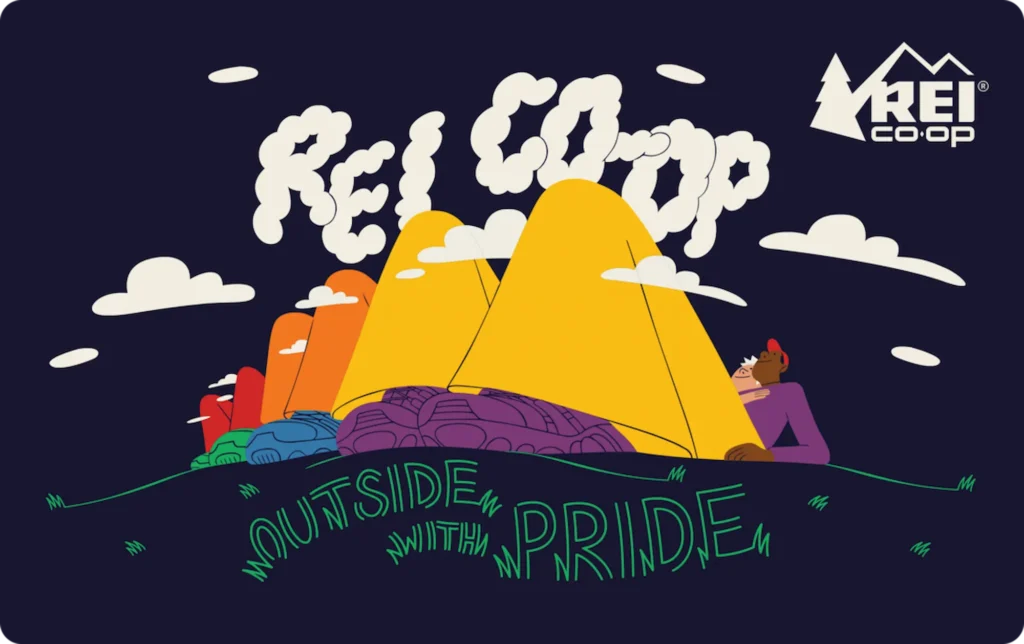
Giving queer creators actual creative ownership over a campaign produces something that feels different from a brand simply casting queer people in an ad someone else wrote. With REI x Alva Skog, the visual language came from Skog’s existing body of work, not from a brief asking them to make something “Pride-y.” That distinction tends to show in the final product, and audiences notice it.
Sesame Street: the bravery of posting at all
Sometimes the most meaningful thing a brand can do is simply not back down.
Sesame Street posted Pride flag colors rendered in the familiar fur textures of its characters. Simple, warm, and immediately recognizable. And predictably, a wave of reactionary backlash followed, including the usual bad-faith accusations that have been weaponized against queer communities for decades.
They posted it anyway.
For a children’s show operating in the current climate, that’s not a small thing. The creative wasn’t the most elaborate campaign of the year, but the willingness to hold the line matters. That’s a form of brand integrity that audiences notice.
What quieter campaigns still teach us
There’s a temptation to measure campaign success by how much noise it makes. But trust doesn’t always work that way.
Some of the strongest LGBTQ brand campaigns in recent years haven’t relied on massive media moments. They’ve relied on long-term relationships with queer communities, real financial support for queer organizations, and creative work that reflects actual lived experience rather than a marketing trend.
If you’re thinking about how to build queer-inclusive marketing that lasts beyond a single campaign cycle, the throughline from this year is consistent: specificity beats generality, community relationships beat seasonal pivots, and showing up outside of June still matters more than what you post in it.
It’s also worth looking at this alongside the broader 2026 LGBTQ marketing trends. The brands finding real traction this year aren’t the ones making the most noise. They’re the ones that have shown up consistently enough that people actually believe them.
What marketers can actually take from this
The lesson from the best queer ad campaigns of 2026 is that you don’t need a bigger budget or a splashier creative concept.
Audiences can tell pretty quickly whether a brand has actually thought about the community it’s speaking to. Who had creative control? Is the financial support real and ongoing? Does the representation continue after Pride Month ends? Those are the questions queer consumers are already asking, whether brands know it or not.
For any brand trying to build genuine queer-inclusive marketing, those questions matter across every campaign and every platform, not just a June ad. Queer consumers research brands carefully before deciding where to spend, and that research now happens across far more places than just Google.
Frequently asked questions about LGBTQ brand campaigns
Many brands have scaled back public LGBTQ initiatives in response to political pressure and public backlash campaigns that gained momentum over the past few years in the USA. Some moved support behind the scenes, and others went quiet altogether.
The short answer is that authentic campaigns give queer people creative ownership, reflect consistent values outside of Pride Month, and back up their messaging with real financial support for LGBTQ organizations.
For brands with genuine community relationships, yes. For brands using Pride as a seasonal campaign with no real substance behind it, audiences have become increasingly good at noticing the difference.
Small and independent businesses often have a credibility advantage that larger corporations struggle to replicate. A queer-owned business or one with genuine long-term ties to queer communities doesn’t need a big budget to show up meaningfully.
Start by asking whether the support is real and ongoing, not just June-specific. Financial contributions to LGBTQ organizations, creative control for queer collaborators, and consistent representation year-round are all harder to fake than a limited-edition product.
Performative representation tends to center the brand. Genuine representation tends to center the community. One asks, “How do we look inclusive?” The other asks, “What does this community actually need from us?”
For brands doing it authentically, LGBTQ consumers tend to be highly loyal to brands they trust and vocal advocates within their communities. The long-term relationship value is real, but it requires consistent investment, not a once-a-year activation.
Not sure how to get it right?
Building inclusive marketing that actually lands, without it feeling performative or tacked on, is genuinely hard to do well. It’s one of those things where good intentions aren’t quite enough on their own.
If you’re trying to figure out what authentic queer representation looks like for your brand specifically, Marketing by Rocio works with businesses that want to get it right. If any of the campaigns above felt like the standard you want to meet, let’s talk about how to get there.